

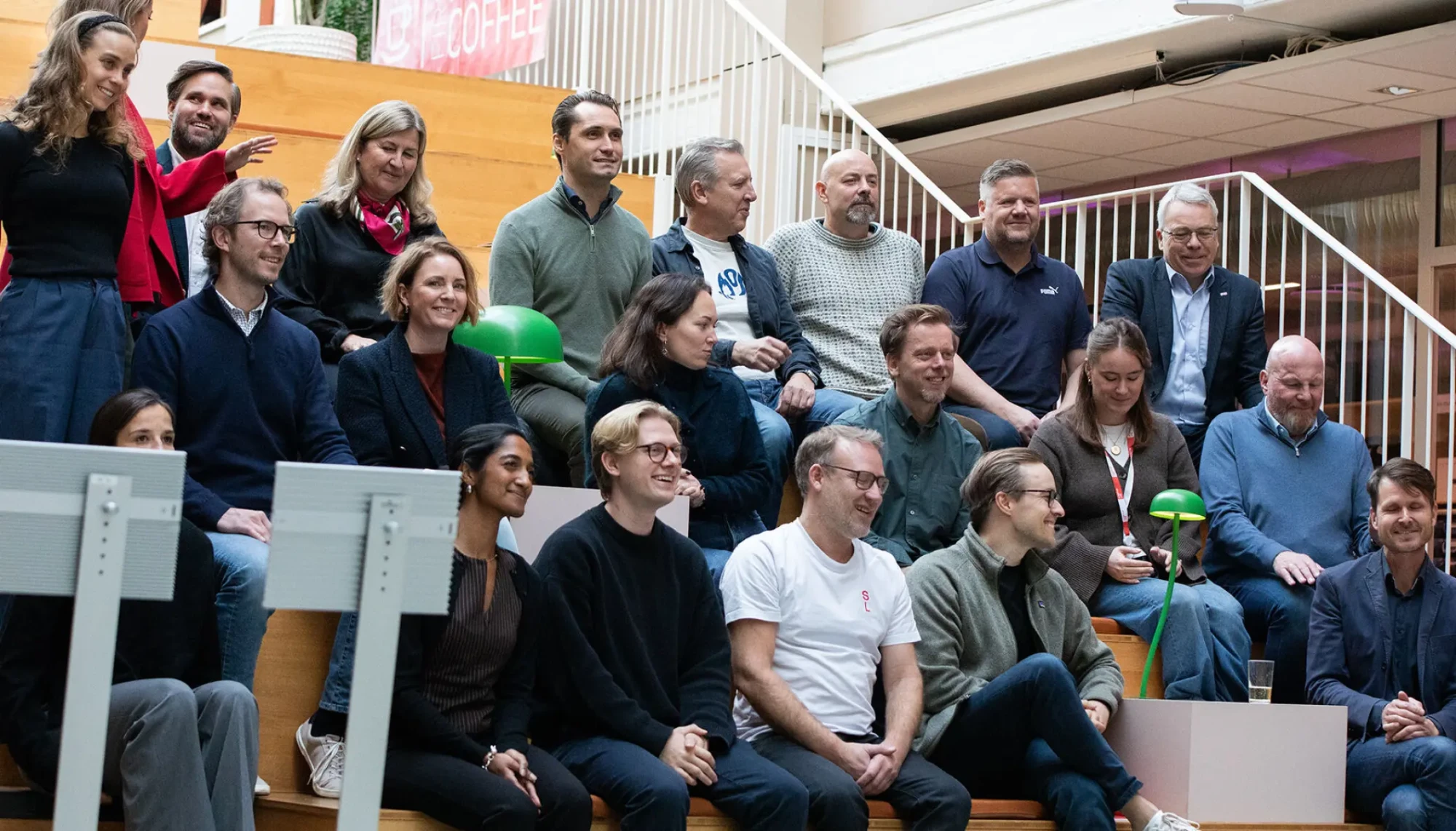
This opinion piece was first published in Norwegian by Shifter on 17 November 2026. Lars-Fredrik Forberg is CEO and co-founder of Kinetic Blocks and president of Robotics Norway. Translated and republished in English. Top photo: Mia Sandnes Nilsen.
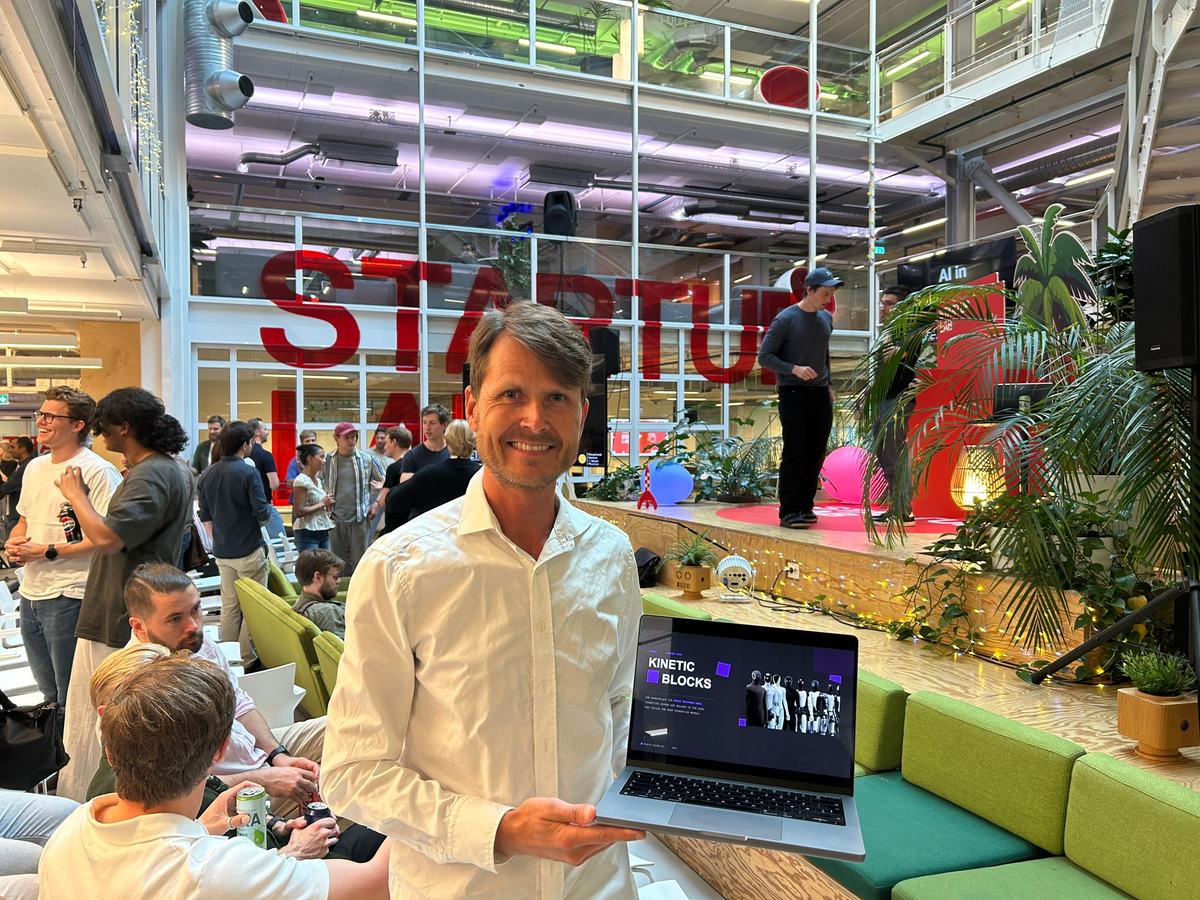
Lars-Fredrik Forberg, president of Robotics Norway, at Startuplab in Oslo.
China has made humanoid robots a national priority, and Morgan Stanley estimates that the world will have close to one billion humanoids by 2050. At the same robot density the bank expects in the United States, Norway would then have around one million, which is why regulation, test arenas and skills must be in place by 2035.
In March this year China adopted a five-year plan that names the technology behind humanoid (human-like) robots as one of its priority industries of the future. Chinese manufacturers talk openly about a robot in every home, and the first household robots are due to move into ordinary homes in Wuhan early in 2027.
Last year, Chinese companies supplied around 90 percent of all humanoids sold worldwide.
Robots are infrastructure
Water, roads, power, public transport and digital infrastructure are planned for the long term, partly funded by the public and included in national preparedness, because society does not function without them.
Robots doing physical work in nursing homes, hospitals and industry will take on the same role in a country where Statistics Norway estimates that health and care services will be short of 42,400 full-time positions in 2040, and where the number of people of working age begins to fall from the mid-2030s (Government of Norway).
A country that depends on robots in elderly care without controlling the software, the data or the spare parts has given up part of its freedom to act in a crisis. Robots therefore belong in preparedness planning, not only in procurement departments.
Let others build the robots, and compete on data and deployment
Most of the humanoids put to work in Norway will probably be made in China, the United States or Germany, because mass production demands supply chains and capital that Norway does not have. Our opportunity lies in the links that decide whether a robot actually works in a specific work task.
We can start now by collecting consent-based data on how healthcare workers, operators and hotel staff do their work, use that data to train robot policies over the coming years, and deploy robots at scale once the technology is mature. Norwegian businesses will then hold the data, the skills and the reference customers when the market takes off.
500 robot labs, ideally one in every municipality
Oslo's Nursing Home Agency wants to build a "robot gym" where robots can be tested and trained in a controlled environment before they meet residents. That is the right order of things, even though a municipal agency has neither the mandate nor the budget to build and run such a test arena on its own.
Robotics Norway supports setting up 500 robot labs in Norway, ideally one in every municipality, where nursing homes, schools, businesses and founders can try out robots on their own work tasks, collect data under shared rules for consent and ownership, and share what they learn. What is learned in Oslo can then be used in Bodø without every municipality having to start from scratch.
What the government and parliament must do
The government and the Storting should adopt a national plan for robotics and physical AI with the same weight as the National Transport Plan, fund robot labs and test arenas with health and care as the first priority, clarify the rules for collecting and owning work data, let municipalities and health trusts be first customers through innovative procurement, and bring robots into the national preparedness plans.
We must be ready
The decisions that determine whether Norway becomes a competent user of robots and a supplier of data and services, or merely a market for other people's technology, must be made in this parliamentary term and the next. If you do not do the job yourselves, the Robot Party, with 50 percent humanoids on the ballot, may stand for election in 2037 and do it for you.
About Robotics Norway
Robotics Norway is a network of Norwegian robotics companies, founders and research communities, founded in November 2026. It works to make Norway adopt robot technology on its own terms, through shared robot labs, knowledge sharing and international cooperation with other robotics communities. Read more in Robotics Norway is up and running.